Creating Progress One Behavior at a Time: The Intersection of Education, Empathy, and Visual Identity
In the rapidly evolving landscape of education and special needs advocacy, few phrases capture the essence of patience, dedication, and measurable success as effectively as Creating Progress One Behavior at a Time. This concept has transcended its origins in behavioral psychology and classroom management to become a powerful visual and cultural statement. For professionals, creators, and entrepreneurs operating in the realms of special education, autism awareness, and inclusive design, this phrase represents more than just a slogan; it is a philosophy of incremental achievement that resonates deeply with teachers, parents, and advocates alike.
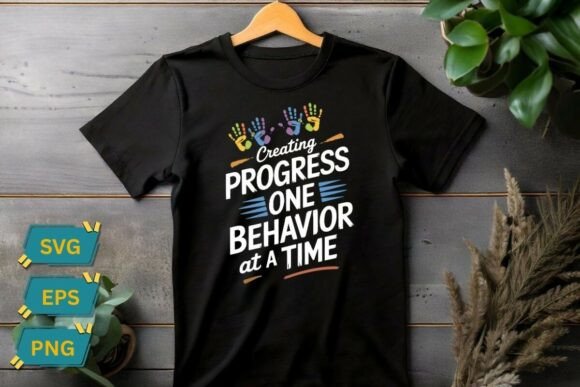
The rise of merchandise and digital assets centered around this message reflects a broader shift in how society views learning disabilities and developmental differences. It moves away from deficit-based models toward a strengths-based approach, celebrating every small victory in a child's development journey. Whether manifested as a Creating Progress One Behavior At A Time Teacher Tee T-Shirt design vector or integrated into digital marketing campaigns, this theme serves as a beacon of hope and professional identity for those working on the front lines of inclusion.
The Core Philosophy: Understanding Incremental Success
To understand why Creating Progress One Behavior at a Time has captured the imagination of so many, one must first look at the pedagogical roots of the phrase. In special education and Applied Behavior Analysis (ABA), progress is rarely linear or immediate. Instead, it is a mosaic of tiny, often invisible steps that eventually coalesce into significant milestones. A student might spend weeks mastering the simple act of raising their hand, only to take months to learn how to transition between tasks without distress.
This philosophy acknowledges that large goals are achieved through the mastery of micro-behaviors. When educators and therapists adopt this mindset, they reduce frustration and increase engagement. By focusing on the immediate, manageable step rather than the distant horizon, they create an environment where success is frequent and tangible. This approach is not limited to the classroom; it is a universal principle of growth that applies to personal development, business strategy, and creative workflows.
Why the Message Resonates in Modern Education
The current educational climate is characterized by a growing demand for personalized learning and neurodiversity-affirming practices. Parents and guardians are increasingly vocal about the need for schools to recognize individual learning trajectories. Consequently, the message of Creating Progress One Behavior at a Time aligns perfectly with the modern push for inclusion. It validates the experiences of families who may feel unheard by traditional systems that prioritize standardized testing over holistic development.
Furthermore, for the teachers themselves, this phrase serves as a crucial reminder of their impact. In a profession often plagued by burnout and high turnover, seeing a tangible representation of their daily efforts—such as wearing a shirt that celebrates the nuance of their work—can be incredibly empowering. It transforms the often exhausting reality of managing complex behaviors into a narrative of purposeful, forward-moving action.
Visualizing the Mission: Design Trends and Market Dynamics
As the concept gains traction, it has naturally found a home in the world of graphic design and apparel. The market for educational and advocacy merchandise is expanding, driven by a consumer base that seeks to express their values through what they wear and display. A well-crafted Creating Progress One Behavior At A Time Teacher Tee T-Shirt design vector is not merely a product; it is a tool for community building and awareness.
Effective designs in this niche often utilize specific color palettes to convey emotion and meaning. The use of vibrant colors such as yellow, blue, pink, and green against a clean white or black background creates a striking contrast that draws attention. These colors are frequently associated with childhood, creativity, and energy, reinforcing the positive nature of the message. In the context of autism awareness, blue is particularly significant, while the addition of pink and green adds a layer of inclusivity and diversity, signaling that this approach benefits all learners regardless of gender or specific diagnosis.
The Role of Hands and Graphic Elements
Many successful iterations of this design incorporate imagery of hands. Hands are a universal symbol of support, guidance, and connection. In a graphic design context, hands reaching out or holding together can visually represent the collaborative effort required in special education. They symbolize the partnership between teacher, student, and family. When combined with the text "Creating Progress One Behavior at a Time," the image of hands grounds the abstract concept of behavioral change in the physical reality of human interaction.
The integration of these elements into a cohesive graphic design requires a keen eye for balance. The text must be legible yet stylized enough to feel artistic rather than clinical. The goal is to create a piece that looks professional when worn in a school setting but also carries enough emotional weight to spark conversations in public spaces. This duality makes the design highly versatile for various applications, from t-shirts and hoodies to posters, mugs, and social media banners.
Technical Excellence: Meeting Professional Standards
For creators and entrepreneurs looking to monetize this trend or distribute these designs, technical quality is paramount. The demand for high-resolution, scalable assets is higher than ever, driven by the needs of print-on-demand services, custom merchandisers, and digital publishers. A standard image file is no longer sufficient; the industry expects versatility and precision.
A robust asset package for this type of design typically includes multiple file formats to ensure compatibility across different platforms. The inclusion of EPS (Encapsulated PostScript) files allows for infinite scalability, making them ideal for large-format printing like banners or billboards. SVG (Scalable Vector Graphics) files are essential for web use and digital cutting machines, ensuring crisp edges on screens and vinyl cuts. Additionally, high-quality PNG files with transparent backgrounds are critical for overlaying designs onto various colored garments or digital mockups without unsightly white boxes.
Resolution is another key factor. Professional standards dictate a minimum of 300 DPI (dots per inch) to ensure sharpness in print. Artboard sizes often extend to dimensions like 4500 x 5400 pixels to accommodate large prints without loss of detail. Furthermore, the use of the RGB color mode ensures that the vibrant hues of yellow, blue, pink, and green appear accurately on digital displays, which is crucial for online marketing and e-commerce listings.
It is important to note for buyers and users that in many pre-designed packages, the text are not editable. This means the typography is rasterized or outlined within the final vector file. While this protects the integrity of the design and ensures consistency, it requires designers to plan their layouts carefully before purchasing. However, for most end-users, such as teachers buying shirts or marketers creating social content, a non-editable, polished final product is often preferable to a template that requires further customization.
Changing Workflows and Consumer Expectations
The popularity of designs like Creating Progress One Behavior at a Time also signals a shift in consumer expectations regarding authenticity and representation. Today's buyers are less interested in generic slogans and more drawn to messages that reflect real-world challenges and triumphs. They want to see their struggles acknowledged and their victories celebrated. This has led to a surge in niche-specific merchandise that speaks directly to the lived experiences of educators and caregivers.
Moreover, the workflow for creating and distributing these goods has evolved. With the advent of advanced vector tools and streamlined print-on-demand ecosystems, independent creators can bring high-quality, meaningful products to market faster than ever before. The ability to download a ZIP file containing EPS, SVG, and PNG formats instantly allows freelancers to integrate these designs into their portfolios or sell them as digital downloads, creating new revenue streams for artists who understand the emotional weight of the subject matter.
Practical Applications in the Field
Beyond apparel, the utility of this design extends into the classroom itself. Teachers often use visual aids to reinforce positive behavior. A poster featuring the phrase Creating Progress One Behavior at a Time with colorful graphics can serve as a constant, gentle reminder to students that their efforts are seen and valued. It can be part of a larger visual schedule or a reward system, helping to demystify the process of learning and self-regulation.
In corporate training and professional development, the concept is equally applicable. Leaders in education administration can use this framework to train staff on patience and the importance of long-term vision. By adopting the mantra of incremental progress, institutions can foster a culture of empathy and resilience, reducing conflict and improving overall outcomes for students with diverse needs.
Looking Forward: The Future of Inclusive Design
As we move forward, the intersection of education, technology, and design will continue to deepen. The principles embodied by Creating Progress One Behavior at a Time are likely to influence not only how we teach but how we design our environments and tools. We can expect to see more personalized, adaptive technologies that mirror this step-by-step approach, breaking down complex tasks into manageable components for users of all abilities.
For the creative community, this presents an ongoing opportunity to innovate. The challenge lies in maintaining the authenticity of the message while exploring new visual languages. As the conversation around autism awareness and inclusion continues to grow, the demand for high-quality, emotionally resonant designs will only increase. By combining technical excellence with deep empathy, creators can produce work that does more than just decorate; it inspires, educates, and unites.
Ultimately, whether you are a teacher wearing a shirt that says Creating Progress One Behavior at a Time, a parent celebrating a milestone, or a designer crafting the next great vector illustration, you are part of a larger movement. It is a movement that recognizes the profound value of every small step and champions the belief that progress, no matter how slow, is always worth celebrating. In a world that often demands instant results, this message offers a refreshing and necessary perspective: that true growth is built, one behavior at a time.