Reading Silhouette Vector Bundle Set: A Practical Guide for Designers and Educators
When you need to convey the essence of learning, literacy, or quiet contemplation in a design project, a simple shape often speaks louder than complex illustrations. The Reading Silhouette Vector Bundle Set offers exactly that: a collection of elegant, clean silhouettes depicting people engaged in reading. Whether you are creating classroom decor, designing book covers, or building marketing materials for an educational startup, these graphics provide a versatile foundation. However, having access to a large bundle does not automatically guarantee a professional result. Many creators overlook critical details regarding file formats, scalability, and stylistic consistency, leading to designs that look pixelated, disjointed, or unprofessional upon final export.
Understanding what makes this specific bundle valuable—and where common pitfalls lie—can save you hours of frustration and ensure your projects maintain high visual standards. This guide explores how to effectively utilize the Reading Silhouette Vector Bundle Set while avoiding the mistakes that often plague digital asset usage.
Why the Reading Silhouette Vector Bundle Set Matters
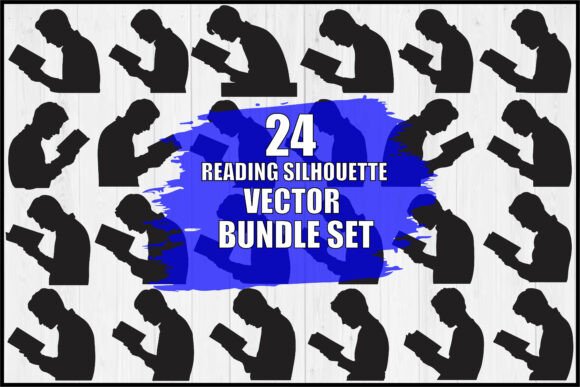
The appeal of the Reading Silhouette Vector Bundle Set lies in its simplicity and versatility. Unlike detailed character art that can clash with various backgrounds or fonts, black silhouettes offer a neutral canvas. They work seamlessly across different color palettes, making them ideal for teachers creating worksheets, librarians designing event posters, or entrepreneurs branding a bookstore. The bundle typically includes 24 variations in multiple formats—EPS, JPG, SVG, and PNG—ensuring compatibility with almost any software, from Adobe Illustrator to Canva.
For educators and small business owners, these assets represent efficiency. Instead of commissioning custom illustrations for every new flyer or lesson plan, you have immediate access to a library of "book lover" and "student reading" poses. These images communicate themes of knowledge, study, and academic growth instantly. Yet, the sheer volume of files and formats can sometimes lead to confusion about which version to use and when.
Common Mistakes When Using Vector Bundles
Even experienced designers sometimes make avoidable errors when integrating vector bundles into their workflows. One of the most frequent issues is selecting the wrong file format for the intended medium. For instance, using a rasterized JPG or PNG file for a large-format print banner can result in jagged edges and blurriness. While the Reading Silhouette Vector Bundle Set includes high-resolution raster options, they are best suited for web use or small-scale prints. If you stretch a low-resolution image beyond its limits, the quality degrades rapidly, undermining the professional look you aim to achieve.
Another overlooked detail is the lack of customization. Many users download the silhouette and place it directly onto their design without adjusting the context. A generic "man reading book" pose might not fit the specific narrative of your project. If you are targeting young children, a silhouette of an adult professor might feel disconnected. Similarly, using a "study scene" graphic without considering the lighting or background texture of your layout can make the element look pasted on rather than integrated.
Furthermore, there is a tendency to treat all vectors as identical in terms of editability. While the SVG and EPS files in the bundle are scalable, they may come grouped in ways that make isolating specific parts difficult. If you attempt to change the color of a student's shirt but cannot separate the layer because the entire figure is grouped as one object, you lose the flexibility that vectors promise. This oversight can force you to abandon the asset entirely or spend excessive time ungrouping and reconstructing elements.
How Format Choices Impact Your Results
The difference between a polished final product and a mediocre one often comes down to file management. The Reading Silhouette Vector Bundle Set provides four distinct formats, each serving a unique purpose. Understanding these distinctions is crucial for maintaining quality and efficiency.
- EPS (Encapsulated PostScript): This is the gold standard for print production. If you are sending your design to a professional printer for banners, brochures, or t-shirts, always start with the EPS file. It retains vector data, allowing for infinite scaling without loss of quality.
- SVG (Scalable Vector Graphics): Ideal for web developers and modern UI/UX designers. SVGs render sharply on any screen size, making them perfect for responsive websites, apps, or digital presentations where the "reading man svg" needs to adapt to mobile views.
- PNG (Portable Network Graphics): Best for quick edits in non-vector software like PowerPoint or basic photo editors. The transparency support is excellent, but remember that once you export to PNG, you lose the ability to scale up significantly without losing resolution.
- JPG (Joint Photographic Experts Group): Generally the least flexible option for this type of graphic due to compression artifacts and lack of transparency. Use this only if you need a quick preview or are working within strict legacy system constraints.
Failing to match the format to the output medium is a primary cause of wasted resources. For example, a teacher creating a large wall display for a school library who uses a PNG file will likely end up with a blurry image that distracts from the message. Conversely, a blogger embedding a massive EPS file directly into a website could slow down page load times unnecessarily.
Strategies for Better Integration and Usage
To get the most out of the Reading Silhouette Vector Bundle Set, approach the assets with a strategic mindset. Before importing any file, ask yourself what the end goal is. Are you designing a physical product, a digital ad, or an educational handout? Once the medium is clear, select the appropriate file format immediately to streamline your workflow.
If you are using vector editing software, take the time to inspect the layers. Even if the silhouettes appear solid, checking for hidden anchor points or grouped paths can reveal opportunities for customization. You might be able to adjust the angle of a book, modify the posture slightly, or add text inside the negative space of the silhouette. This level of engagement transforms a stock image into a bespoke illustration that aligns perfectly with your brand voice.
Consider the context of the surrounding design. A black silhouette works beautifully against light backgrounds, but if your design features a dark theme, simply flipping the color to white might not be enough. You may need to add subtle gradients, shadows, or texture overlays to give the "reader illustration" depth and prevent it from looking flat. This attention to detail elevates the perceived value of your work, whether you are a freelance designer or an educator preparing a presentation.
What to Check Before Finalizing Your Decision
Before committing to a design or purchasing similar assets in the future, verify a few key aspects. First, ensure the license allows for your intended use. Some bundles restrict commercial usage or require attribution, which can be problematic for businesses selling merchandise or offering paid courses. Second, test the files in your actual workflow before starting a major project. Open the AI or SVG files in your preferred software to confirm they open correctly and that the paths are clean and editable.
Finally, evaluate the variety within the bundle. Does the set include diverse poses that suit your specific audience? A robust collection should feature different ages, genders, and settings—from a "student reading" at a desk to a "library vector" scene. If the bundle feels too limited, you might find yourself stretching the same image repeatedly, which can make your content look repetitive and uninspired.
By approaching the Reading Silhouette Vector Bundle Set with intention and technical awareness, you can avoid common traps and create compelling, high-quality visuals. Whether you are decorating a classroom, launching a book club, or designing a logo for an educational app, these tools offer immense potential when used correctly. Focus on the right formats, customize where possible, and always consider the final output environment to ensure your designs resonate clearly and professionally.